Give Me Liberty or Give Me Death: Patrick Henry's Legacy in 2026 Commemorations
By Gil Cohen on January 28, 2026
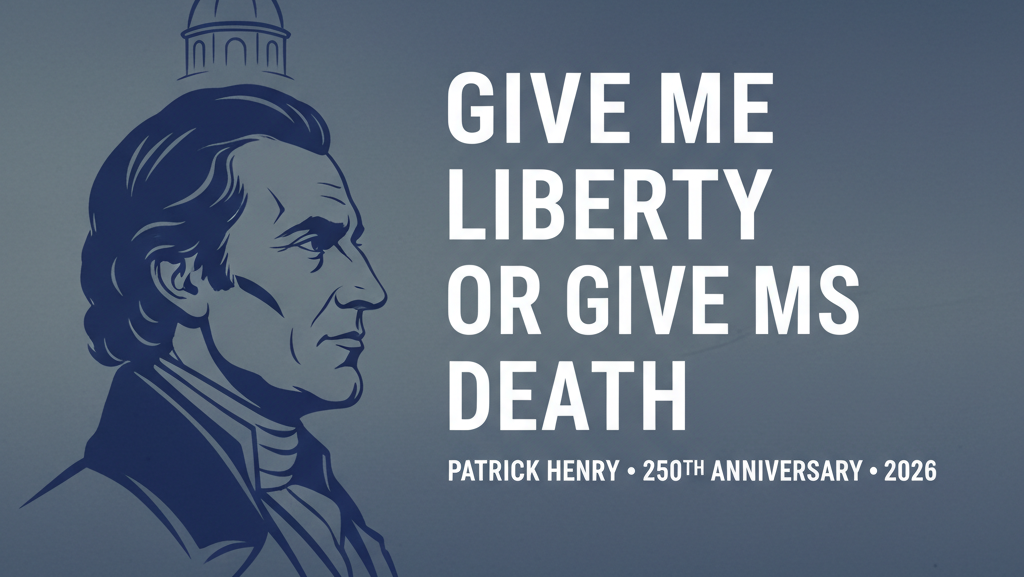
Give Me Liberty or Give Me Death: Patrick Henry's Legacy in 2026 Commemorations
Patrick Henry's impassioned declaration, "Give me liberty or give me death," reverberates through history, a rallying cry that defined the struggle for American independence. As the nation prepares to commemorate the 250th anniversary of this iconic speech in 2026, it’s an opportune moment to reflect on what Henry’s words truly meant and how they continue to shape discussions around freedom and rights today.
Key Takeaways
- Patrick Henry delivered his famous speech on March 23, 1775, at St. John's Church in Richmond, Virginia.
- His words emphasized the importance of personal liberty over submission to tyranny.
- The 2026 commemorations aim to spark renewed discussions on civil rights and individual freedoms.
- Henry’s legacy is often simplified, but his context offers deeper insight into his views on liberty.
- Events will include reenactments, lectures, and community discussions across the nation.
- The anniversary encourages exploration of the ongoing relevance of Henry's message in contemporary society.
- Scholars and historians will contribute to a deeper understanding of Henry's impact on American ideals.
The Historical Context of Henry's Speech
When Henry stood before his contemporaries in 1775, he faced a landscape fraught with tension. The American colonies were on the brink of rebellion against British rule. Henry’s speech was not merely a call to arms; it was a profound statement about the human condition. He articulated a belief that liberty was not just a privilege but a fundamental right, one worth fighting for—indeed, worth dying for.
His famous words were rooted in the belief that life without freedom is a form of death. "Give me liberty or give me death" was a challenge to his audience: would they accept oppression, or would they rise to claim their rights? Understanding the nuances behind Henry’s rhetoric is crucial. For him, liberty was not an abstract concept; it was intertwined with personal responsibility and civic virtue.
The Legacy of Liberty in Contemporary America
Fast forward to 2026, and Henry’s legacy takes on new dimensions. The upcoming commemorations will not only honor the past but also engage with contemporary issues of freedom and rights. In an era where debates over civil liberties, social justice, and governmental authority are pervasive, Henry's declaration resonates with new urgency.
The commemorative events are designed to be more than just historical reenactments. They aim to provoke discussions about the state of liberty today. Issues such as surveillance, free speech, and individual rights often come to the forefront, prompting citizens to ask: What does liberty mean in a modern context? How do we balance individual freedoms with collective security?
Commemorative Events and Their Goals
The 250th anniversary celebrations will feature a variety of events designed to engage both the public and scholars. Reenactments of Henry’s speech will take place in Richmond, the original site, but also in communities across the nation. These events will be accompanied by lectures, panel discussions, and workshops focusing on the implications of Henry’s ideas for today’s society.
The goal of these initiatives is clear: to create a dialogue about the continuing struggle for liberty and the responsibilities that come with it. Participants will reflect on how Henry’s vision can inform current movements advocating for civil rights and liberties. This is not just about remembering a historical figure; it’s about using his legacy as a lens through which to view the present.
The Role of Education in Keeping Henry's Spirit Alive
Education plays a vital role in these commemorations. Schools and universities will incorporate discussions about Henry and his ideals into their curricula. This is not merely an academic exercise; it’s a chance to inspire a new generation to value and fight for their freedoms. By contextualizing Henry’s words in today’s climate, educators can help students understand the stakes involved in maintaining liberty.
Interactive programs, such as debates and community service projects, will also allow participants to engage actively with Henry’s ideals. The hope is to ignite passion for civic engagement, encouraging individuals to become advocates for their rights and the rights of others.
Conclusion: A Call to Action
As we approach the 250th anniversary of Patrick Henry’s stirring proclamation, let it serve as a reminder that liberty is not a given; it is a continuous struggle. The commemorations of 2026 are an invitation to reflect on Henry’s enduring message and to recognize our own roles in safeguarding freedom. What will you do to honor his legacy? Embrace the challenge, engage in the dialogue, and contribute to the ongoing fight for liberty. After all, the battle for rights and freedoms is never truly won; it is a journey that requires constant vigilance and participation.