Kent State Echoes: Risks of Militarized Political Conflict in Modern America
By sonia frankel on January 28, 2026
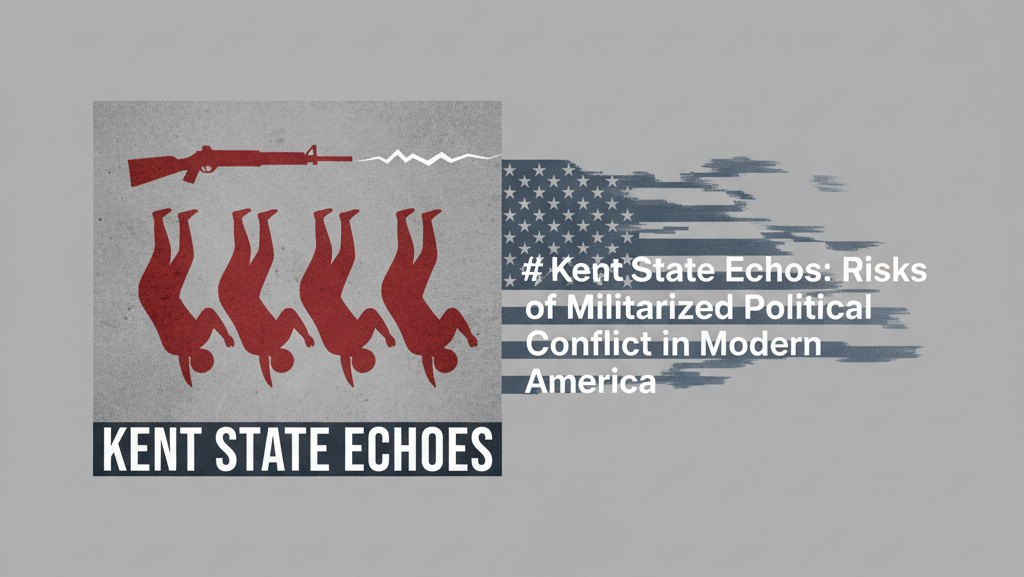
Kent State Echoes: Risks of Militarized Political Conflict in Modern America
In May 1970, a tragic event unfolded on the campus of Kent State University when National Guardsmen opened fire on students protesting the U.S. invasion of Cambodia during the Vietnam War. Four students lost their lives, and nine were wounded. This catastrophic moment not only marked a turning point in American protest culture but also serves as a haunting reminder of the dangers inherent in militarized political conflict. As tensions rise in contemporary America, the echoes of Kent State resonate loudly, urging a re-examination of how political dissent is handled today.
Key Takeaways
- Kent State symbolizes a historical moment when political dissent met military force, leading to tragic consequences.
- The militarization of police forces in the U.S. has raised concerns about the potential for similar violence in modern protests.
- Recent events, such as the protests following George Floyd's death, highlight a troubling pattern of aggressive law enforcement responses.
- Increased political polarization has made civil discourse difficult, with protesters facing heightened risks of confrontation.
- The legacy of Kent State has influenced subsequent civil rights movements and discussions about the right to protest.
- Understanding the history of militarized responses can inform current debates on police reform and political expression.
- Legal frameworks surrounding protest rights continue to evolve, reflecting ongoing tensions between authority and civil liberties.
The Legacy of Kent State
The events of Kent State were not just a flashpoint; they crystallized the fears of a generation. The images of students falling to gunfire shocked the nation and ignited widespread outrage. This tragedy underscored the perils of equating political dissent with national security threats. As protests against racial injustice and other socio-political issues gain momentum, the lessons from Kent State become critically relevant.
Today, the memory of Kent State serves as a caution against the militarization of political conflict. The deployment of military-style tactics by law enforcement during protests can escalate tensions rather than diffuse them. This phenomenon was starkly visible during the protests following the murder of George Floyd in 2020, when federal agents were deployed to quell unrest in cities across the nation.
The Militarization of Law Enforcement
Historically, the militarization of police forces has been justified as a means to combat crime and maintain order. However, this approach has led to a troubling trend where law enforcement treats protesters as potential threats rather than citizens exercising their rights. The use of tear gas, rubber bullets, and riot gear in civilian contexts raises ethical questions about the role of police in democratic societies.
The Kent State incident serves as a stark warning against the normalization of such militarized responses. As we witness more frequent clashes between law enforcement and protesters, the risk of violence remains ever-present. The potential for tragedy looms large, echoing the past and serving as a reminder that history can repeat itself.
Political Polarization and Its Consequences
In recent years, American society has become increasingly polarized, with political divisions spilling into public life. This polarization complicates the landscape of protest, making it difficult for dissenting voices to be heard without inciting backlash. Protests that once focused on social justice or civil rights now risk being framed as threats to public safety or national security.
The heightened stakes surrounding political protests can lead to an atmosphere of fear and mistrust. Activists may find themselves facing aggressive police tactics simply for exercising their right to speak out. The memory of Kent State serves as a powerful reminder of how quickly the situation can escalate, potentially resulting in tragedy.
Moving Forward: Lessons Learned
To honor the memory of those lost at Kent State, society must grapple with the implications of militarized responses to political conflict. Legal protections for peaceful protest must be upheld, and discussions about police reform should prioritize accountability and community engagement. By fostering an environment where dissent is met with dialogue rather than aggression, the risks associated with militarized political conflict can be mitigated.
The echoes of Kent State remind us that the fight for civil rights and the right to protest is ongoing. As the nation navigates its complex political climate, the lessons learned from the past must inform future actions. Only by understanding where we have been can we chart a course toward a more just and equitable society.
In the end, the challenge is clear: to prevent the past from repeating itself, Americans must recognize and address the risks of militarized political conflict. In doing so, we honor the legacy of those who stood for their beliefs, ensuring that their sacrifices were not in vain.