How a Smartphone Actually Works Inside
By Jamal Ware on June 25, 2026
Most people use a smartphone dozens—or even hundreds—of times a day. We send messages, browse the internet, take photos, watch videos, navigate unfamiliar places, and manage our schedules, all from a device that fits comfortably in a pocket.
Yet despite how familiar smartphones have become, few people understand what is actually happening inside them.
The truth is that a smartphone is essentially a powerful computer packed into a remarkably small space. It contains multiple components working together simultaneously to process information, connect to networks, display images, store data, and respond to user input in real time.
Understanding the basics of how a smartphone works can make one of the most important technologies in modern life feel a little less mysterious.
The processor is the phone’s brain
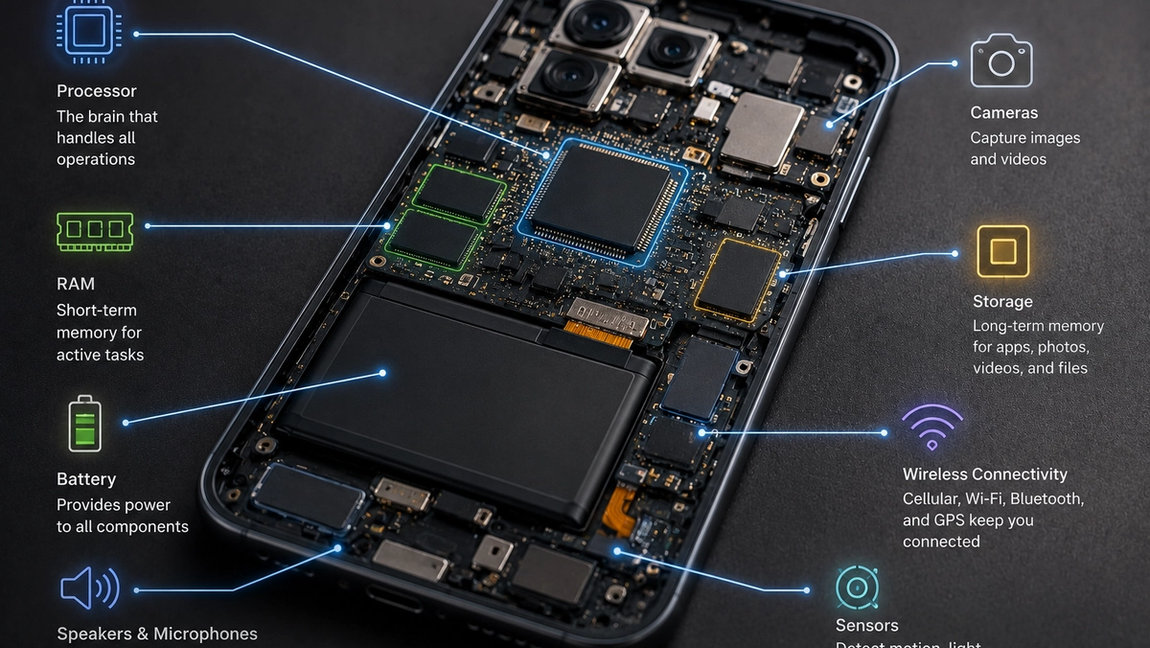
At the center of every smartphone is a processor, often called the CPU (Central Processing Unit).
The processor handles calculations and instructions that allow the phone to function. Every tap, swipe, app launch, photo edit, and web search involves the processor performing millions—or even billions—of operations.
Modern smartphone processors are incredibly powerful. In many ways, they are more advanced than the computers that helped send humans to the Moon.
The faster and more efficient the processor, the smoother the phone generally feels during everyday use.
This tiny chip acts as the control center for almost everything your phone does.
Memory helps the phone multitask
Smartphones rely on two main types of memory: RAM and storage.
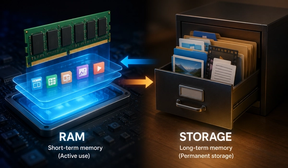
RAM (Random Access Memory) temporarily holds information that the phone is actively using. For example, when you switch between apps, RAM helps keep those apps available without needing to reload them completely.
Storage, on the other hand, is where your photos, videos, apps, documents, and operating system are permanently stored.
Think of RAM as a desk where you’re actively working and storage as a filing cabinet where information is kept long term.
Both are important, but they serve different purposes.
The display turns data into visuals
The screen is one of the most visible and impressive parts of a smartphone.
When you open an app, watch a video, or view a photo, the phone converts digital information into visual images displayed on millions of tiny pixels.
Modern displays can refresh many times per second, creating smooth animations and responsive interactions.
Touchscreens also contain sensors that detect where your fingers make contact. When you tap an icon, those sensors send information to the processor, which then determines how the phone should respond.
The process happens so quickly that it feels instantaneous.
Batteries provide portable power
Every smartphone depends on a rechargeable battery.
The battery stores electrical energy that powers all of the phone’s components. Without it, the processor, display, cameras, sensors, and wireless systems would stop functioning immediately.
Battery technology has improved significantly over the years, but power consumption remains one of the biggest challenges for smartphone manufacturers.
Many features that make phones powerful—bright displays, fast processors, GPS, cameras, and wireless connectivity—also require energy.
This is why battery life remains such an important consideration for users.
Cameras are computers too
Modern smartphone cameras are far more sophisticated than they appear.
While the camera lens captures light, much of the final image quality comes from software processing. When you take a photo, the phone doesn’t simply save what the sensor sees.
Instead, it analyzes the scene, adjusts colors, balances lighting, reduces noise, sharpens details, and sometimes combines multiple images into a single photograph.
Artificial intelligence increasingly helps improve image quality by recognizing faces, landscapes, food, pets, and other subjects.
In many ways, smartphone photography is as much about computing power as it is about camera hardware.
Wireless communication keeps you connected
One of the most impressive things a smartphone does is communicate wirelessly.
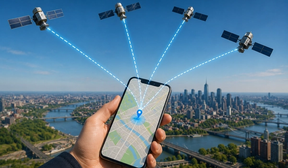
Using cellular networks, Wi-Fi, Bluetooth, and GPS, phones constantly exchange information with nearby devices, satellites, and internet servers.
When you send a message, your phone converts that information into digital signals that travel through communication networks before reaching the recipient.
When you stream a video, data travels from remote servers across the internet and arrives on your device within seconds.
Although these processes seem simple from the user’s perspective, they involve incredibly complex systems operating behind the scenes.
Sensors help phones understand the world
Modern smartphones contain numerous sensors that help them interact with their environment.
Common sensors include:
- Accelerometers that detect movement
- Gyroscopes that measure orientation
- GPS receivers that determine location
- Ambient light sensors that adjust screen brightness
- Proximity sensors that detect when the phone is near your face
- Fingerprint or facial recognition systems for security
These sensors allow smartphones to respond intelligently to changing conditions and user behavior.
Many features people use every day would not be possible without them.
It’s really a computer in your pocket
The easiest way to understand a smartphone is to think of it as a compact computer designed for mobility.
It has a processor, memory, storage, input systems, output systems, networking hardware, sensors, and software—all working together constantly.
What makes smartphones remarkable is not any single component but the way these technologies combine into a device that most people carry everywhere they go.
More complex than it appears
A smartphone may look simple from the outside, but inside it is one of the most sophisticated consumer products ever created.
Every message sent, photo taken, map viewed, and video streamed relies on millions of tiny operations happening in perfect coordination. Processors calculate, memory stores information, sensors gather data, networks communicate, and software brings everything together.
The result is a device so powerful and convenient that many of us barely think about how extraordinary it really is.
Yet every time you unlock your phone, you’re holding a small technological marvel in the palm of your hand.