How Compound Interest Actually Works (And Why It Matters)
By Jamal Ware on June 25, 2026
If you’ve ever heard someone describe compound interest as “the eighth wonder of the world” or “the secret to building wealth,” you might have wondered what makes it so special.
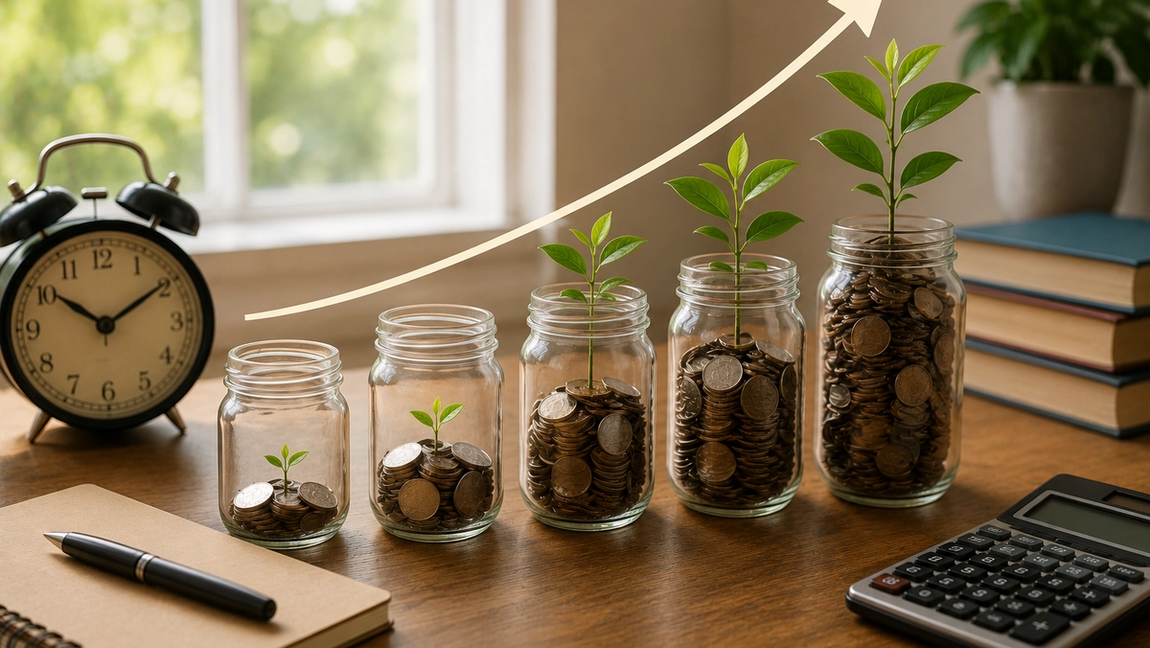
The concept itself is surprisingly simple. Compound interest is what happens when your money earns interest, and then that interest starts earning interest too. Over time, this creates a snowball effect that can dramatically increase the value of savings and investments.
At first, the growth may seem slow. But given enough time, compound interest can become one of the most powerful forces in personal finance.
What is compound interest?
Most people understand regular interest. If you deposit money into a savings account or investment and earn interest, your balance grows.
Compound interest takes this one step further.
Instead of earning interest only on your original deposit, you also earn interest on the interest you’ve already accumulated. As your balance grows, the amount of interest earned each year becomes larger.
The basic idea is illustrated by the compound interest formula:
You don’t need to memorize the formula to understand the concept. The important takeaway is that growth accelerates over time because you’re earning returns on an increasingly larger amount of money.
Why compound interest starts slowly
One reason people underestimate compound interest is that its benefits aren’t obvious in the beginning.
Imagine investing $1,000 and earning 8% per year. After the first year, you’ve earned $80. That doesn’t seem life-changing.
In the second year, however, you’re earning interest on $1,080 rather than your original $1,000. Your gains become slightly larger.
By the third year, you’re earning interest on an even bigger balance.
At first, the difference feels small. But as the years pass, the growth becomes increasingly noticeable because each year’s gains help generate even more gains in the future.
This is why compound interest is often compared to rolling a snowball down a hill. It starts small, but it gathers momentum as it grows.
Time matters more than most people realize
When it comes to compound interest, time is often more important than the amount invested.
Someone who starts investing modest amounts in their twenties may end up with significantly more money than someone who invests larger amounts but starts much later.
The reason is simple: early investments have more years to compound.
Every year your money remains invested creates another opportunity for growth. The longer the time horizon, the greater the impact of compounding.
This is why financial experts frequently encourage people to start saving and investing as early as possible, even if the initial amounts seem small.
The power comes from consistency and patience rather than from making huge contributions right away.
Compound interest works against you too
While compound interest can help build wealth, it can also work in the opposite direction.
Credit card debt is a common example.
When interest charges are added to an outstanding balance, future interest may be calculated on both the original debt and previous interest charges. This can cause debt to grow surprisingly quickly if balances aren’t paid off.
The same force that helps investments grow can make borrowing more expensive over time.
Understanding compound interest can therefore help you make smarter decisions not only about saving but also about managing debt.
Small contributions can become surprisingly large
Many people avoid investing because they believe they need a large amount of money to get started.
In reality, regular contributions are often more important than the initial amount.
Imagine saving a small amount each month. Individually, those contributions may seem insignificant. But each deposit has the opportunity to earn returns, and those returns can compound over time.
Years later, a substantial portion of your account balance may come not from your original contributions but from the growth generated by compounding.
This is one reason long-term investors often focus more on consistency than on trying to perfectly time the market.
The biggest mistake is waiting
Perhaps the most costly mistake people make with compound interest is assuming they have plenty of time to start later.
Because compounding grows slowly at first, it’s easy to underestimate the value of getting started today. Yet every year of delay reduces the amount of time available for your money to grow.
You don’t need perfect conditions, a large salary, or extensive financial knowledge to benefit from compound interest. What matters most is beginning and allowing time to do its work.
Even small amounts invested consistently can benefit from decades of growth.
Why compound interest matters
Compound interest matters because it rewards patience.
In a world that often emphasizes quick results, compounding demonstrates the power of gradual progress. It turns small, consistent actions into significant outcomes over time.
Whether you’re saving for retirement, building an emergency fund, investing for future goals, or simply trying to improve your financial situation, compound interest can become one of your greatest allies.
The concept is simple: your money earns returns, and those returns earn returns of their own. The longer that cycle continues, the more powerful it becomes.
That’s why compound interest isn’t just a financial formula—it’s a reminder that small actions, repeated consistently over time, can lead to extraordinary results.