How Streaming Changed the Way We Watch Everything
By Darwin Lee on June 25, 2026
Not long ago, watching a movie or television show required planning.
You had to tune in at a specific time, rent a DVD, buy a physical copy, or wait for a program to be broadcast again. Missing an episode often meant waiting weeks—or even months—for another opportunity to watch it.
Today, that experience feels almost unimaginable.
Streaming has transformed how people consume entertainment, giving audiences instant access to enormous libraries of content whenever and wherever they want. What began as a convenient alternative to traditional television has fundamentally changed viewing habits, business models, and even the way stories are created.
In many ways, streaming has reshaped entertainment more dramatically than any technology since television itself.
Entertainment became available on demand
One of the biggest changes brought by streaming is control.
For decades, television schedules determined what viewers watched and when they watched it. Broadcasters decided programming times, and audiences adjusted their schedules accordingly.
Streaming reversed that relationship.
Instead of organizing life around television schedules, viewers gained the ability to watch content whenever it suited them. Movies, documentaries, television series, and live events became available with just a few clicks.
This shift may seem simple, but it fundamentally changed audience expectations. Convenience became the new standard.
Today, waiting for a scheduled broadcast often feels unusual rather than normal.
Binge-watching became a cultural phenomenon
Streaming also changed how stories are consumed.
Traditional television typically released episodes weekly, giving audiences time to discuss, speculate, and anticipate what would happen next. Streaming platforms introduced a different approach by making entire seasons available immediately.
This gave rise to binge-watching.
Viewers could watch multiple episodes—or even an entire season—in a single sitting. Storylines felt more continuous, and audiences became deeply immersed in shows without waiting days or weeks between episodes.
While some streaming services have since returned to weekly releases for certain programs, binge-watching remains one of the defining habits of the streaming era.
The rise of personalized recommendations
Before streaming, discovering new content often depended on television guides, reviews, advertisements, or recommendations from friends.
Streaming platforms changed this by using algorithms to suggest content based on individual viewing habits.
Every movie watched, series completed, or genre explored helps shape future recommendations. Over time, platforms learn what users enjoy and tailor suggestions accordingly.
This personalization has made it easier to discover content that might otherwise have gone unnoticed.
At the same time, it has changed how entertainment is marketed, shifting some of the power from traditional promotion to recommendation systems.
Content became more global
Streaming dramatically expanded access to international content.
In the past, viewers were often limited to programming produced in their own country or region. Today, audiences can easily watch shows and films from around the world.
A drama produced in one country can become a global hit within days. Foreign-language series regularly attract international audiences, and cultural barriers that once limited distribution have become much smaller.
As a result, streaming has helped expose viewers to a wider variety of stories, perspectives, and creative styles than ever before.
The entertainment landscape has become increasingly global.
The business of entertainment changed
Streaming didn’t just change viewing habits—it transformed the entertainment industry itself.
Studios and networks once relied heavily on advertising revenue, physical media sales, and traditional broadcasting. Streaming introduced subscription-based models that shifted how content is funded and distributed.
Competition among streaming platforms also increased investment in original programming. Services began producing exclusive films, documentaries, and television series to attract subscribers.
This competition has resulted in an enormous volume of content, giving audiences more choices than ever before.
However, it has also created challenges, including rising production costs and increasing competition for viewers’ attention.
We now watch everywhere
Perhaps one of the most significant changes is that entertainment is no longer tied to a single device.
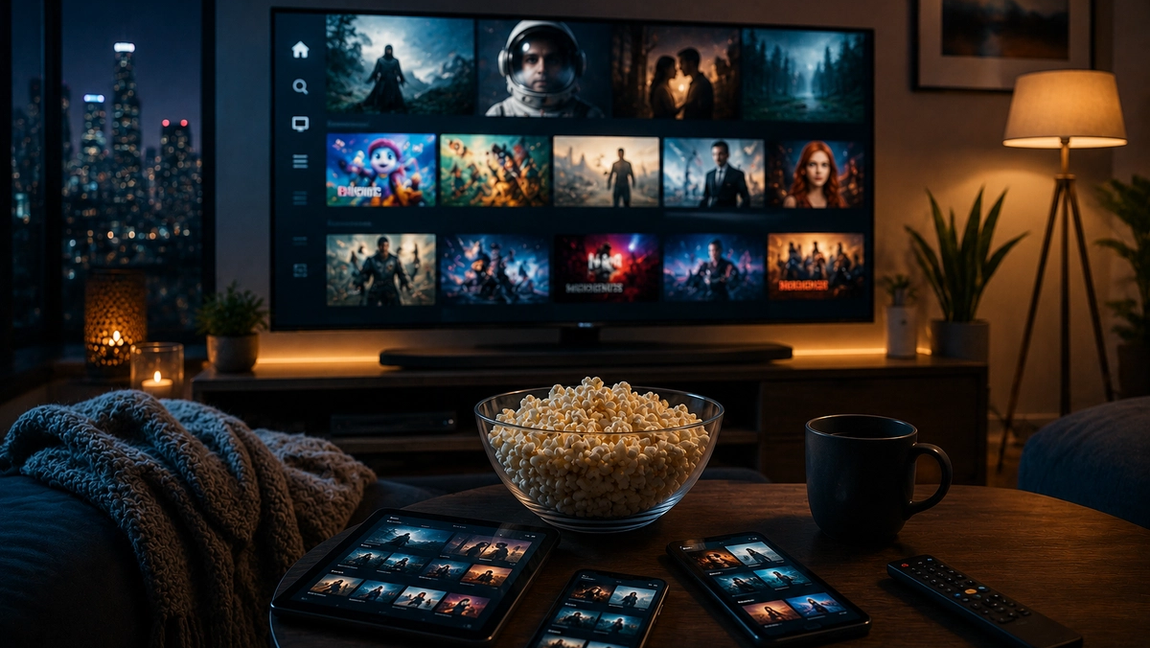
Streaming allows people to watch content on televisions, laptops, tablets, and smartphones. A movie can begin in a living room, continue during a commute, and finish later on another device.
This flexibility has made entertainment more portable and accessible than previous generations could have imagined.
The concept of “watching TV” has evolved into something much broader than sitting in front of a television set.
Today, screens are everywhere.
Has streaming changed how we pay attention?
While streaming offers tremendous convenience, it has also changed viewing habits in less obvious ways.
The abundance of content can make it difficult to decide what to watch. Many people spend significant amounts of time browsing before selecting something. Others divide their attention between multiple screens while watching.
At the same time, the constant availability of entertainment has reduced the sense of scarcity that once surrounded popular programs and major television events.
These shifts have sparked ongoing debates about whether streaming has improved the viewing experience or simply changed it.
The answer likely depends on individual preferences.
A new era of entertainment
Streaming succeeded because it solved a simple problem: people wanted greater control over what they watched and when they watched it.
What began as a more convenient way to access movies and television quickly evolved into a technology that transformed the entire entertainment industry. It changed viewing habits, expanded access to global content, encouraged binge-watching, and redefined audience expectations.
Today, instant access to entertainment feels normal. Yet the ability to watch virtually anything, anytime, and almost anywhere would have seemed extraordinary only a generation ago.
Streaming didn’t just change how we watch television—it changed how we experience entertainment itself.