The Real Difference Between 4G, 5G, and Wi-Fi 6
By Myra Hall on June 25, 2026
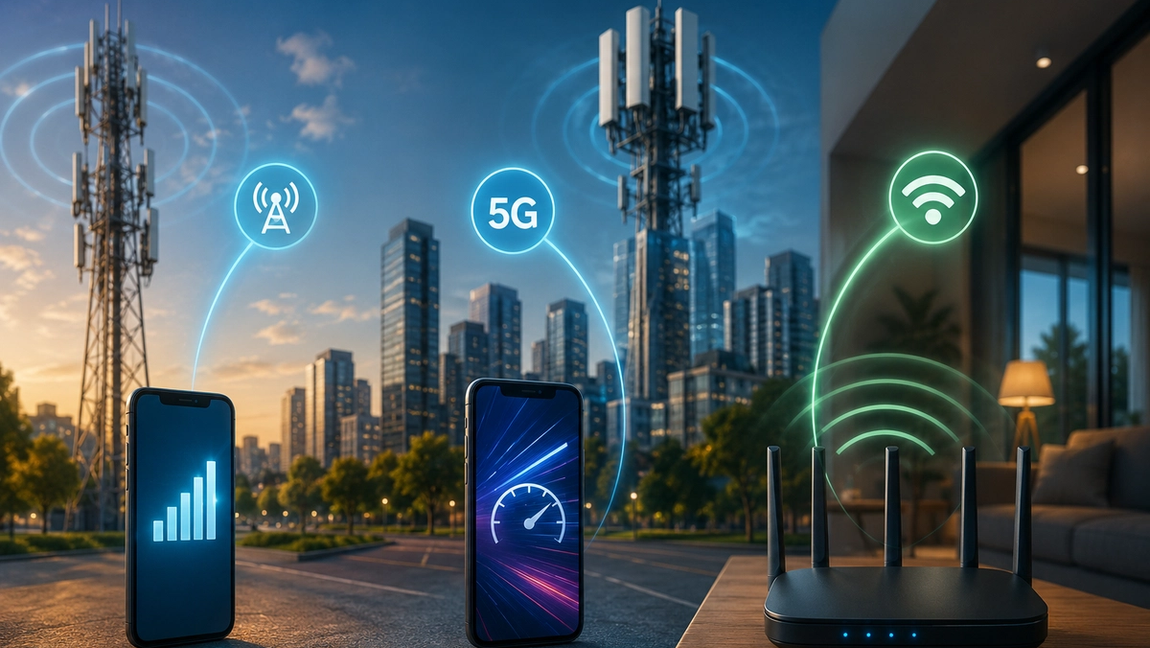
If you’ve bought a new phone, laptop, or router recently, you’ve probably seen terms like 4G, 5G, and Wi-Fi 6 everywhere. They’re often marketed as major upgrades, but it can be difficult to understand what they actually mean and how they affect your everyday experience.
While all three technologies help devices connect to the internet, they are designed for different purposes and operate in different ways. Understanding the differences can help you make smarter decisions when choosing a phone plan, upgrading your home network, or buying a new device.
What is 4G?
4G, short for fourth-generation mobile network technology, is the cellular network that powered most smartphones throughout the 2010s.
When you’re away from home and using mobile data to browse the web, stream music, or watch videos, you’re likely using a 4G or 5G connection. Unlike Wi-Fi, cellular networks are operated by mobile carriers and are designed to provide internet access across large geographic areas.
Compared to the older 3G standard, 4G brought significantly faster speeds, lower latency, and a much better experience for streaming, video calls, and mobile apps.
For most everyday tasks, 4G remains more than capable. Activities such as social media browsing, navigation, online shopping, and HD video streaming work smoothly on a strong 4G connection.
What makes 5G different?
5G is the fifth generation of cellular technology and the successor to 4G.
The biggest improvement isn’t just speed—it’s efficiency. While 5G can deliver much faster download and upload speeds, it also reduces latency, which is the delay between sending and receiving information.
Lower latency means actions happen more quickly. Video calls feel more responsive, online gaming experiences improve, and cloud-based applications can react faster.
Another major advantage is capacity. Modern cities contain thousands of connected devices competing for network resources. 5G is designed to handle far more simultaneous connections than 4G, helping networks perform better in crowded areas such as stadiums, airports, and city centers.
However, not all 5G networks are equal. Some versions offer only modest improvements over 4G, while others can deliver dramatically higher speeds under ideal conditions.
What is Wi-Fi 6?
Wi-Fi 6 is not a cellular technology at all. Instead, it’s the latest generation of Wi-Fi designed for local wireless networks such as those in homes, offices, schools, and public spaces.
Rather than connecting to a mobile carrier’s network, Wi-Fi connects your device to a router, which then provides internet access through a broadband connection.
Wi-Fi 6 improves upon previous Wi-Fi standards by offering higher efficiency, better performance in crowded environments, and improved battery life for connected devices.
One of its biggest strengths is handling multiple devices simultaneously. Modern households often contain dozens of connected gadgets, including phones, laptops, smart TVs, speakers, cameras, and smart home devices. Wi-Fi 6 was specifically designed to manage these busy environments more effectively.
Speed isn’t the whole story
People often focus exclusively on speed, but speed is only one part of the picture.
A connection that can theoretically reach extremely high speeds isn’t always the most useful if it’s unreliable or overloaded. Factors such as latency, coverage, network congestion, and device compatibility can have just as much impact on your experience.
For example, a strong Wi-Fi 6 connection at home may feel faster and more stable than a weak 5G signal. Similarly, a reliable 4G connection can often outperform a congested public Wi-Fi network.
The best technology is often the one that provides the most consistent performance in your specific situation.
When you’ll use each one
Most people use all three technologies without thinking about it.
When you’re at home, your phone may connect to Wi-Fi 6 through your router. As soon as you leave the house, it automatically switches to a 4G or 5G cellular network. Throughout the day, your device constantly chooses the best available connection based on signal strength and availability.
If you’re streaming movies on your couch, Wi-Fi 6 will likely provide the best experience. If you’re navigating with maps while traveling, you’ll rely on 4G or 5G. If you’re attending a crowded event, 5G may perform better than older cellular technologies because it can support more connected users at once.
Each technology is designed to excel in different environments.
Which one should you choose?
The good news is that most people don’t need to choose between them. Modern devices support multiple connection methods and switch automatically when appropriate.
When upgrading a smartphone, 5G support is generally worth having because networks will continue expanding over the coming years. For home internet users, upgrading to a Wi-Fi 6 router can improve performance, especially in households with many connected devices.
Meanwhile, 4G remains highly capable and will continue serving millions of users for years to come.
The key takeaway is simple: 4G and 5G are cellular technologies that provide internet access over mobile networks, while Wi-Fi 6 is a local wireless networking standard designed for homes, businesses, and public spaces. They aren’t direct competitors—instead, they work together to keep our devices connected wherever we go.
If you’ve bought a new phone, laptop, or router recently, you’ve probably seen terms like 4G, 5G, and Wi-Fi 6 everywhere. They’re often marketed as major upgrades, but it can be difficult to understand what they actually mean and how they affect your everyday experience.
While all three technologies help devices connect to the internet, they are designed for different purposes and operate in different ways. Understanding the differences can help you make smarter decisions when choosing a phone plan, upgrading your home network, or buying a new device.
What is 4G?
4G, short for fourth-generation mobile network technology, is the cellular network that powered most smartphones throughout the 2010s.
When you’re away from home and using mobile data to browse the web, stream music, or watch videos, you’re likely using a 4G or 5G connection. Unlike Wi-Fi, cellular networks are operated by mobile carriers and are designed to provide internet access across large geographic areas.
Compared to the older 3G standard, 4G brought significantly faster speeds, lower latency, and a much better experience for streaming, video calls, and mobile apps.
For most everyday tasks, 4G remains more than capable. Activities such as social media browsing, navigation, online shopping, and HD video streaming work smoothly on a strong 4G connection.
What makes 5G different?
5G is the fifth generation of cellular technology and the successor to 4G.
The biggest improvement isn’t just speed—it’s efficiency. While 5G can deliver much faster download and upload speeds, it also reduces latency, which is the delay between sending and receiving information.
Lower latency means actions happen more quickly. Video calls feel more responsive, online gaming experiences improve, and cloud-based applications can react faster.
Another major advantage is capacity. Modern cities contain thousands of connected devices competing for network resources. 5G is designed to handle far more simultaneous connections than 4G, helping networks perform better in crowded areas such as stadiums, airports, and city centers.
However, not all 5G networks are equal. Some versions offer only modest improvements over 4G, while others can deliver dramatically higher speeds under ideal conditions.
What is Wi-Fi 6?
Wi-Fi 6 is not a cellular technology at all. Instead, it’s the latest generation of Wi-Fi designed for local wireless networks such as those in homes, offices, schools, and public spaces.
Rather than connecting to a mobile carrier’s network, Wi-Fi connects your device to a router, which then provides internet access through a broadband connection.
Wi-Fi 6 improves upon previous Wi-Fi standards by offering higher efficiency, better performance in crowded environments, and improved battery life for connected devices.
One of its biggest strengths is handling multiple devices simultaneously. Modern households often contain dozens of connected gadgets, including phones, laptops, smart TVs, speakers, cameras, and smart home devices. Wi-Fi 6 was specifically designed to manage these busy environments more effectively.
Speed isn’t the whole story
People often focus exclusively on speed, but speed is only one part of the picture.
A connection that can theoretically reach extremely high speeds isn’t always the most useful if it’s unreliable or overloaded. Factors such as latency, coverage, network congestion, and device compatibility can have just as much impact on your experience.
For example, a strong Wi-Fi 6 connection at home may feel faster and more stable than a weak 5G signal. Similarly, a reliable 4G connection can often outperform a congested public Wi-Fi network.
The best technology is often the one that provides the most consistent performance in your specific situation.
When you’ll use each one
Most people use all three technologies without thinking about it.
When you’re at home, your phone may connect to Wi-Fi 6 through your router. As soon as you leave the house, it automatically switches to a 4G or 5G cellular network. Throughout the day, your device constantly chooses the best available connection based on signal strength and availability.
If you’re streaming movies on your couch, Wi-Fi 6 will likely provide the best experience. If you’re navigating with maps while traveling, you’ll rely on 4G or 5G. If you’re attending a crowded event, 5G may perform better than older cellular technologies because it can support more connected users at once.
Each technology is designed to excel in different environments.
Which one should you choose?
The good news is that most people don’t need to choose between them. Modern devices support multiple connection methods and switch automatically when appropriate.
When upgrading a smartphone, 5G support is generally worth having because networks will continue expanding over the coming years. For home internet users, upgrading to a Wi-Fi 6 router can improve performance, especially in households with many connected devices.
Meanwhile, 4G remains highly capable and will continue serving millions of users for years to come.
The key takeaway is simple: 4G and 5G are cellular technologies that provide internet access over mobile networks, while Wi-Fi 6 is a local wireless networking standard designed for homes, businesses, and public spaces. They aren’t direct competitors—instead, they work together to keep our devices connected wherever we go.
If you’ve bought a new phone, laptop, or router recently, you’ve probably seen terms like 4G, 5G, and Wi-Fi 6 everywhere. They’re often marketed as major upgrades, but it can be difficult to understand what they actually mean and how they affect your everyday experience.
While all three technologies help devices connect to the internet, they are designed for different purposes and operate in different ways. Understanding the differences can help you make smarter decisions when choosing a phone plan, upgrading your home network, or buying a new device.
What is 4G?
4G, short for fourth-generation mobile network technology, is the cellular network that powered most smartphones throughout the 2010s.
When you’re away from home and using mobile data to browse the web, stream music, or watch videos, you’re likely using a 4G or 5G connection. Unlike Wi-Fi, cellular networks are operated by mobile carriers and are designed to provide internet access across large geographic areas.
Compared to the older 3G standard, 4G brought significantly faster speeds, lower latency, and a much better experience for streaming, video calls, and mobile apps.
For most everyday tasks, 4G remains more than capable. Activities such as social media browsing, navigation, online shopping, and HD video streaming work smoothly on a strong 4G connection.
What makes 5G different?
5G is the fifth generation of cellular technology and the successor to 4G.
The biggest improvement isn’t just speed—it’s efficiency. While 5G can deliver much faster download and upload speeds, it also reduces latency, which is the delay between sending and receiving information.
Lower latency means actions happen more quickly. Video calls feel more responsive, online gaming experiences improve, and cloud-based applications can react faster.
Another major advantage is capacity. Modern cities contain thousands of connected devices competing for network resources. 5G is designed to handle far more simultaneous connections than 4G, helping networks perform better in crowded areas such as stadiums, airports, and city centers.
However, not all 5G networks are equal. Some versions offer only modest improvements over 4G, while others can deliver dramatically higher speeds under ideal conditions.
What is Wi-Fi 6?
Wi-Fi 6 is not a cellular technology at all. Instead, it’s the latest generation of Wi-Fi designed for local wireless networks such as those in homes, offices, schools, and public spaces.
Rather than connecting to a mobile carrier’s network, Wi-Fi connects your device to a router, which then provides internet access through a broadband connection.
Wi-Fi 6 improves upon previous Wi-Fi standards by offering higher efficiency, better performance in crowded environments, and improved battery life for connected devices.
One of its biggest strengths is handling multiple devices simultaneously. Modern households often contain dozens of connected gadgets, including phones, laptops, smart TVs, speakers, cameras, and smart home devices. Wi-Fi 6 was specifically designed to manage these busy environments more effectively.
Speed isn’t the whole story
People often focus exclusively on speed, but speed is only one part of the picture.
A connection that can theoretically reach extremely high speeds isn’t always the most useful if it’s unreliable or overloaded. Factors such as latency, coverage, network congestion, and device compatibility can have just as much impact on your experience.
For example, a strong Wi-Fi 6 connection at home may feel faster and more stable than a weak 5G signal. Similarly, a reliable 4G connection can often outperform a congested public Wi-Fi network.
The best technology is often the one that provides the most consistent performance in your specific situation.
When you’ll use each one
Most people use all three technologies without thinking about it.
When you’re at home, your phone may connect to Wi-Fi 6 through your router. As soon as you leave the house, it automatically switches to a 4G or 5G cellular network. Throughout the day, your device constantly chooses the best available connection based on signal strength and availability.
If you’re streaming movies on your couch, Wi-Fi 6 will likely provide the best experience. If you’re navigating with maps while traveling, you’ll rely on 4G or 5G. If you’re attending a crowded event, 5G may perform better than older cellular technologies because it can support more connected users at once.
Each technology is designed to excel in different environments.
Which one should you choose?
The good news is that most people don’t need to choose between them. Modern devices support multiple connection methods and switch automatically when appropriate.
When upgrading a smartphone, 5G support is generally worth having because networks will continue expanding over the coming years. For home internet users, upgrading to a Wi-Fi 6 router can improve performance, especially in households with many connected devices.
Meanwhile, 4G remains highly capable and will continue serving millions of users for years to come.
The key takeaway is simple: 4G and 5G are cellular technologies that provide internet access over mobile networks, while Wi-Fi 6 is a local wireless networking standard designed for homes, businesses, and public spaces. They aren’t direct competitors—instead, they work together to keep our devices connected wherever we go.